St Andrews has seen many different scientific developments across a range of specialisations. From the development of photography to advancements within medicine. You can explore all this and more right here!
After reading the information below, use our science quiz to see what you can remember.
Mathematics has been present in St Andrews University since the teaching of logic in the mediaeval era. Many town residents and students revolutionised the world of mathematics from the development of calculus to the creation of examinations!
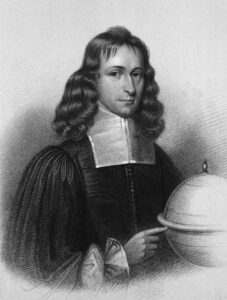
He was the first to state and prove a version of the Fundamental Theorem of Calculus and was the first to write a textbook concerning Calculus, which is why calculus was taught at St Andrews a hundred years before it was on the curriculum at the University of Cambridge.
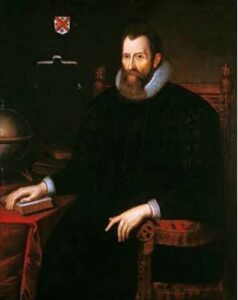
Scottish Mathematician John Major (1467-1550) worked in Paris and St Andrews teaching logic and theology. He studied at Cambridge for around a year before furthering his studies in France.
He contributed to a range of fields, including ethics, metaphysics, theology, biblical commentary, history and (above all) logic, at which he especially excelled. Furthermore, he did considerable work in legal human rights granting human rights to the so-called “savages” conquered by the Spanish.
John Napier (1550-1617), was a Scottish landowner, mathematician, physicist, astronomer, and discoverer of logarithms. He is credited with the invention of the so-called ‘Napier’s bones’ (a calculating device) and made common the use of the decimal point.
He was enrolled in St Salvator’s College in the University of St Andrews at the age of 13, and it is suspected that he left Scotland to further his education in mainland Europe.
From a television presenter to our very own Bell Pettigrew Museum, St Andrews has seen a host of developments in the field of natural history. Here you can explore some of the key characters that made ground breaking discoveries right here in St Andrews!
Saba Douglas-Hamilton (b. 1970) is a Kenyan wildlife conservationist, television presenter, and documentary film producer. Her father was an English zoologist and her mother was an Italian-Kenyan conservationist so she had her inspiration from a young age.
She first attended school in Kenya, then United World College of the Atlantic in Wales, before coming to the University of St Andrews. After graduating in 1993 with a Master of Arts in Social Anthropology, she began working with the Save the Rhino Trust in Namibia, Kenya. Douglas-Hamilton first started working in film in 1997 with the BBC Natural History Unit.
Within this, he discovered that biological creatures and their physical structures must conform to the laws of physics and can be further understood through mathematical equations.
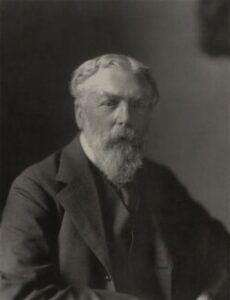
Geologist Charles Lapworth (1842-1920) taught English at Madras College, St Andrews. Although predominately self-taught in the field of geology, he made significant contributions to research regarding the Southern Uplands.
He is mostly remembered for proposing the Ordovician epoch, a new classification of Lower Paleozoic rocks between the Cambrian and the Silurian periods. This term only gained international approval 40 years after his death.
St Andrews University is still home to a prestigious medical school which was one of the first disciplines taught here. Throughout the many centuries, there have been countless medical advancements by our students and residents that had a massive impact on the world!
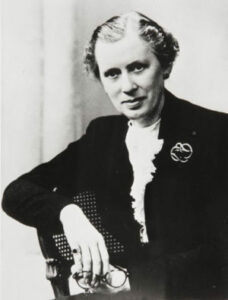
Margaret Fairlie (1891-1963) was born on West Balmirmer Farm, Angus. She studied medicine at the University of St Andrews and University College Dundee, graduating in 1915. Dr Fairlie began working at Dundee Royal Infirmary and teaching in the medical school in 1920.
Dr Fairlie eventually became Head of Clinical Gynaecology in Dundee and Professor of Obstetrics and Gynaecology in St Andrews, despite opposition from the University Board. Adverse in the ability to overcome obstacles as a woman in a male-dominated field, she became the first female professor in Scotland.
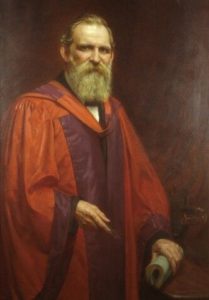
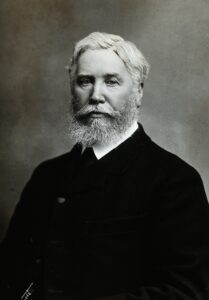
Bell Pettigrew was educated at the University of Glasgow and he later moved to the University of Edinburgh to continue his study of medicine. He was an outstanding scholar of anatomy and appointed Croonian lecturer at the Royal Society of London in 1860.
George Martine, The Younger (1700-1741) studied at the University of St Andrews and became a physician. As a student, he headed a riot during the Jacobite rebellion of 1715, ringing the college bells the day that the ‘Old Pretender’ was proclaimed king.
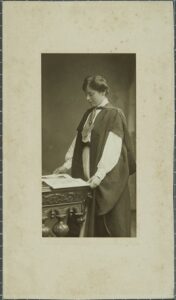
Adeline Herbert Campbell (1887-1965) attended the University of St Andrews in 1905 until 1912 when she graduated with a degree in medicine. She lived in University Hall, then an all-female residence, with her seven sisters.
Following the outbreak of World War One, Campbell served as a nurse in Serbia, earning various medals, including the Serbian Red Cross and the Order of Sava, for her services.
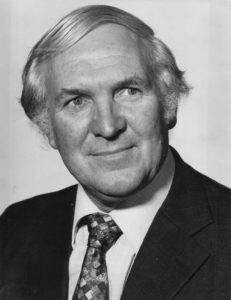
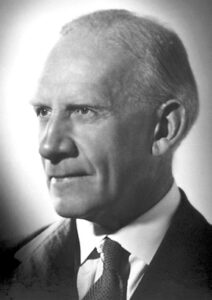
Sir James Whyte Black was a Scottish pharmacologist, and the only graduate from the University of St Andrews that holds a Nobel prize. His exceptional research on pharmacy led him to develop 2 very famous drugs for pain and disorder management in the human heart and stomach.
Black earned his degree in 1946, and a few years later, in 1950 he founded a physiology department at the University of Glasgow Veterinary School. He continued to teach in other universities until 1958, when he joined the Imperial Chemical Industries, working as a senior pharmacologist.
St Andrews has seen a range of developments within chemistry, including the symbol for benzene and contributions to the development of a medicinal sugar used to treat British troops during World War 1. Explore more about the people behind these discoveries.
Sir Robert Robinson was born in 1886, at Rufford, near Chesterfield, Derbyshire. He was an organic chemist, which would involve the studying carbon-containing compounds.
Throughout his career, Robinson made a wide variety of discoveries, including those that led to the development of the first synthetic antimalarial drug, which can be used to treat or prevent malaria. Whilst at St Andrews, Robinson invented the ring symbol for benzene, which is still in use today.
Sir James Irvine was born on May 9th 1877 in Glasgow. Whilst at St Andrews, Irvine worked under Professor Thomas Purdie; himself a notable Scottish chemist who is widely credited with founding the School of Chemistry at the University of St Andrews.
Irvine made some significant scientific contributions during his time at St Andrews. During WWI, he was instrumental in the development of a pure medicinal sugar called Dulcitol. This invention was used to treat British troops suffering from fever and meningitis, saving thousands of lives
St Andrews had a massive impact on early photography that allowed for the development of the modern camera and also the capture of many memories of the world in the nineteenth century. Discover the people who developed the field of photography.
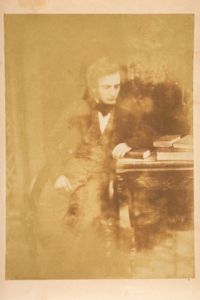
Robert Adamson (1821-1848) was born at Burnside, near St Andrews, and was educated at Madras College. While in St Andrews, he was introduced to the calotype photography process by his brother, Dr John Adamson, and Sir David Brewster.
Due to his fragile health, he did not become an engineer as he had originally planned, becoming a photographer instead. During his short life, Adamson established himself as a pioneer of early photography, best known for his collaboration with the painter David Octavius Hill. The two created over 2500 calotypes in their 5 years together.
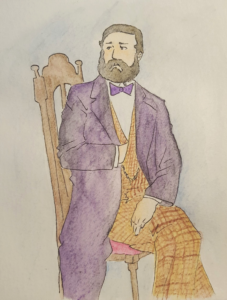
Iván Szabό (1822-1858) was from Marosvásárhely, present-day Târgu Mureş, a city in Transylvania, then part of Hungary. Not much is known about Szabό’s early life other than his education in many languages. As a young adult, Szabό ran a book-selling business in Pest, nowadays a part of Budapest.
Since St Andrews was a dynamic and important centre of early photography, it is not surprising that Szabό also learned the art of photography after he moved here in 1849. Thomas Rodger, the professional photographer in town, taught him the calotype process, an early photographic process. Szabό was active as an amateur photographer until 1857.
Iván Szabό, drawing by Elena Romero-Passerin D’Entreves after a self-portrait of the photographer
show less
Thomas Rodger was a Scottish photographer from St Andrews. He was born on 1832 in a working class family. He is famous for installing the first studio of photography in town and being a pioneer for his field in St Andrews. He has won many awards and medals for his innovating work and his use and development of the catalotyping method.
Rodger’s exceptional photographic work has created an archive full of moments and places of the town, and can now be found in the Wardlaw Museum and at the University’s Library. Being the first professional photographer of the town he managed to capture and show the world the beauty of this special place.